The Least Glamorous Line in Your Kitchen Quote Is the One You’ll Notice Every Day
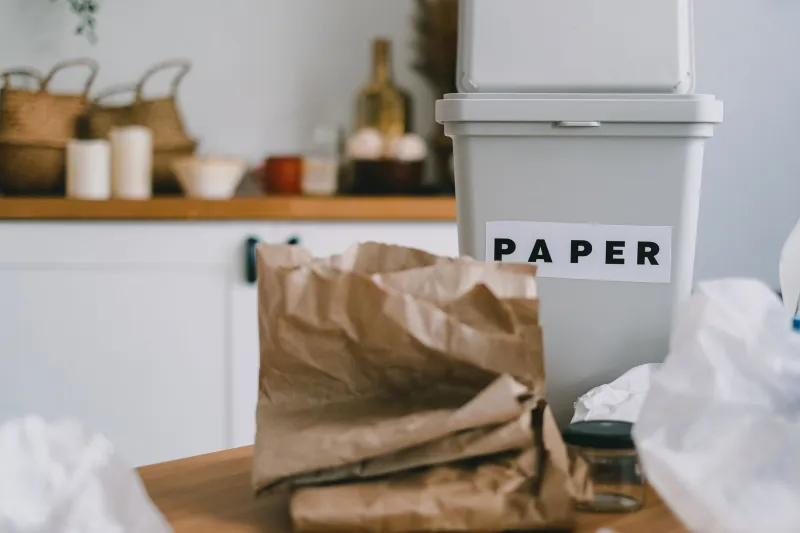
Most kitchen conversations start with worktops, tapware and whether the island should be 2.4 or 2.7 metres. The bin tends to arrive as an afterthought: a pull-out cassette squeezed into whatever cabinet is left over. That is a mistake. In a real British kitchen, waste is a daily traffic problem. It involves scraps, packaging, coffee grounds, pet food tins, glass, cardboard and the strange plastic tray your council may or may not accept. Get the bin zone wrong and you will spend the next decade opening a door into a bag, chasing a lid that never quite closes, or apologising for a smell near the dining table.
Treat the waste zone as a planning decision in the same tier as the sink and hob. It needs space, a route, a clear set of streams and a budget line. It is not glamorous, but it is one of the few parts of a kitchen that every household uses several times a day.
Start with the council, not the cabinet catalogue
Recycling rules in the UK are wonderfully local. One council wants glass separate; another takes it mixed. Some collect food waste weekly in a small caddy; others do not collect it at all. Some accept cartons; neighbours a mile away may not. Before you choose a three-bin pull-out, check your council’s current kerbside guide and note the containers you actually need to store indoors. In a flat or a terraced house with no side return, that might be two small caddies and a bag for cardboard. In a family home with a garden, it might be a larger mixed recycling bin plus food waste and general rubbish.
Measure those containers. A 600mm cabinet with a pull-out frame can hold two or three bins, but capacity is often smaller than the marketing photos suggest. If your council issues a tall food caddy, check it fits under the sink with the plumbing. If you need to store bottles until collection day, plan a dedicated crate or a deeper drawer rather than hoping they will balance on top of the recycling.
The three-bin trap
An integrated pull-out bin system looks neat. It also eats cabinet space and can be surprisingly fussy. A typical 600mm pull-out might give you two 15-litre bins plus a small food caddy; that is fine for a couple, tight for a family of five. A 300mm or 400mm slim pull-out can be a better answer for a small kitchen because it uses a narrow cabinet that would otherwise become a dead corner for baking trays.
Think about how you will use it. The bin should be close to the prep area and the sink, because that is where most waste is created. It should not force you to step back into the middle of the room every time you peel a carrot. It should also not sit directly next to the oven or an open flame, and it must not block the route between the fridge and the hob. In a small kitchen, a door-mounted bin on the inside of a low cabinet can work, but only if the door has a soft-close hinge and the bin is easy to lift out for cleaning.
One more practical point: check door and drawer clearance. A pull-out bin needs room to open, and a bin drawer under a worktop can clash with a dishwasher door or a corner cabinet. Draw it on the plan, not just in your head.
Smells, pests and the details that save you
Smell is rarely about the bin itself. It is about air, moisture and time. A lid that seals properly helps. So does a bin that is easy to remove and wash. Avoid fitting a bin into a cabinet lined with bare chipboard; one leak and the cabinet will swell. A wipeable liner, a sealed base and a charcoal filter can make a difference, but they are not a substitute for emptying the food waste regularly.
In the UK, food waste caddies are often the smelliest part of the system. Keep the caddy small enough that it fills quickly, line it with a compostable bag if your council accepts them, and site it near the prep zone rather than at the far end of the kitchen. If you have a utility room or a garage, a second caddy there can be useful, but do not make the main kitchen bin a long walk away. Convenience keeps the system working.
Pests are a layout issue as well as a hygiene issue. A bin stored outside the back door is not automatically better if the door is a draughty Victorian original and the bin sits in a damp passage. A sealed, washable indoor system that is emptied daily is often the more sensible answer.
The composting question
If you have a garden, composting can reduce the amount of food waste you store indoors. But be honest about what you will keep doing in February. A bokashi bin, a wormery or a traditional compost heap all need some management. They are not a magic solution for cooked food, and they are not suitable for every household. If your council collects food waste, use that service as the baseline and treat home composting as a bonus rather than a replacement.
What it costs in 2026
A basic freestanding bin costs £20–£60. A proprietary pull-out bin kit might be £100–£250, before the cabinet. A fully integrated waste drawer with two or three containers can be £250–£600 depending on the hardware and the cabinet involved. A small food caddy is £15–£40, and filters or compostable liners add a modest running cost. The bigger cost is the cabinet space you give up. In a tight kitchen, losing a 600mm cabinet to bins can hurt more than the hardware price.
That is why it belongs in the budget early. If you are spending £20,000 on a mid-range kitchen in 2026, the waste system is a tiny percentage of the total, but retrofitting one later can mean cutting a cabinet, changing a drawer box or losing storage. Decide before the worktops go on.
A short checklist before the worktop lands
- Check your council’s current collection rules and container sizes.
- Count the streams you really need: general waste, mixed recycling, glass, food waste, perhaps cardboard.
- Site the bin between prep and sink, not in a traffic pinch point.
- Confirm door, drawer and appliance clearances.
- Choose washable, sealed containers with a liner that fits.
- Budget for the hardware and the cabinet space.
- Plan a secondary caddy only if it will actually be used.
Bins are not the bit of a kitchen anyone photographs. They are, however, the bit that decides whether the room feels calm or faintly chaotic by Thursday. Plan them early, size them honestly and give them a proper place in the budget. Your future self, holding a dripping bag and looking for the recycling, will thank you.